
The whistle blows. The ball hits the net. A blockchain oracle updates a price feed. Somewhere, a portfolio of 'World Cup winner tokens' doubles. Elsewhere, it halves. This is not an investment thesis. It is a binary bet wrapped in blockchain jargon, executed at the speed of a smart contract.
I have seen this pattern before. In 2017, during the ICO mania, I audited five projects promising 'decentralized prediction markets.' The code looked clean on the surface. But the oracle logic was a single point of failure: one compromised API call, and the entire payout structure collapsed. The same structural fragility haunts today's sports betting tokens. The World Cup quarterfinals are just the latest catalyst.
Let me be precise. These tokens—whether called fan tokens, prediction tokens, or event-based assets—share a common architecture: their value is contingent on a discrete, external event. A football match. A tennis set. A political election. The outcome is binary. The token price becomes a leveraged derivative of that outcome. This is not an asset; it is a contingent claim. And contingent claims, in the absence of hedge mechanisms, are pure gambling instruments disguised as crypto innovation.
The Liquidity Trap
Consider the lifecycle. Before a major match, hype drives volume. Speculators pile in, expecting a win for their team. The token price rises. Liquidity providers are drawn by high yields. Then the match ends. The result is known. The token's utility vanishes until the next event. Liquidity dries. LPs exit. The price crashes. This is not a bug; it is the token's design. It is a rent-seeking structure that extracts value from uninformed retail traders who mistake volatility for opportunity.
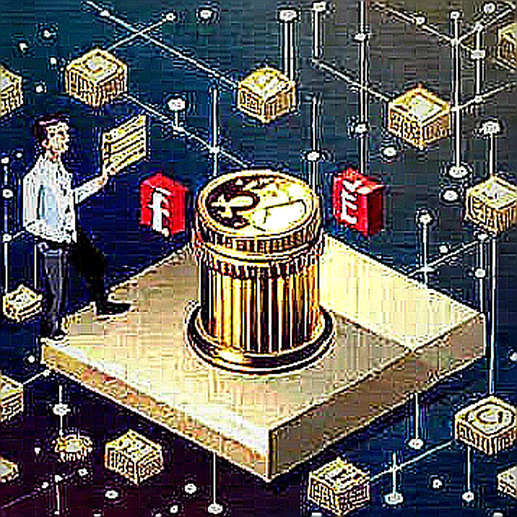
During the 2020 DeFi summer, I reverse-engineered the liquidity models of Uniswap and Compound. I built simulations showing how liquidity depth decays under asymmetric information. The same dynamic applies here. After a match, the information asymmetry becomes complete: the outcome is known. No amount of AMM math can restore capital efficiency when the pricing oracle no longer carries uncertainty.
The Oracle Problem
I return to the core technical risk: oracle dependency. Every sports betting token relies on a feed—often centralized or semi-decentralized—to determine the result. If that feed is manipulated, delayed, or fails, the smart contract executes on false premises. This is not theoretical. In my 2017 audit, I found a project that used a single API endpoint for its World Cup predictions. A DDoS on that API would have frozen funds. The same risk exists today, amplified by the scale of mainstream attention.
Chainlink offers decentralized oracles, but most sports tokens cannot afford the security. They use cheaper alternatives. The result is a system where the oracles are the weakest link. Volatility is the tax on unverified assumptions. Here, the assumption is that the oracle is truthful and available. That assumption is not backed by cryptographic security. It is backed by trust in a third party.
Regulatory Quicksand
Now layer on regulatory risk. In the United States, sports betting remains illegal in many states. Cryptocurrency-based betting adds a second layer of illegality: the offering of unregistered securities. The SEC has already targeted prediction market tokens. The CFTC has its own jurisdiction. A team token that appreciates based on match outcomes could easily be classified as a security—or as a gambling instrument. Either classification triggers enforcement.
In 2022, during the Terra collapse, I structured a hedge portfolio that shorted structurally flawed algorithmic stablecoins. I saw the same pattern: a narrative that promised stability but delivered binary risk. Sports betting tokens are the narrative-driven equivalent. They promise 'fan engagement' but deliver regulatory exposure. The SEC does not care about football culture. It cares about whether the token passes the Howey test.
The regulatory quicksand is deep. If the token is deemed a security, it must register. If it is deemed gambling, it must obtain state licenses. Most projects do neither. They operate in a grey zone that is sustainable only until the first enforcement action. Then the liquidity disappears overnight.
The Contrarian Angle: Statistical Arbitrage Windows
Now for the counter-intuitive take. While I advise against holding these tokens as long-term positions, there is a small window for statistical arbitrage by sophisticated traders. If you can model the probability distribution of a match outcome better than the market (using odds from traditional bookmakers), you can exploit price discrepancies in the token market before the oracle updates.
For example, if a team's win probability is 60% on Betfair but the token price implies only 50%, there is an edge. You buy the token before the match, hedge with a traditional bet on the opposing team, and lock in a risk-free profit. I used a similar approach during the 2024 ETF macro thesis when analyzing the correlation between BTC spot and futures prices.
But this is not for retail. It requires capital, speed, and access to multiple betting venues. And it assumes the oracle is honest. If the oracle is manipulated, your hedge fails. The risk-adjusted return is poor for most participants.

The Takeaway
Code executes logic; humans execute fear. The logic of sports betting tokens is simple: they transfer value from the uninformed to the informed, from the passive to the active. In a bear market, survival matters more than gains. These tokens offer neither. They are call options on randomness, not positions in a growing ecosystem.
My advice: treat them as zero. Either allocate zero capital, or allocate only what you are willing to lose completely—and hedge with off-chain positions. The structural flaws of oracle dependency, regulatory exposure, and liquidity evaporation make them liabilities, not assets.
Volatility is the tax on unverified assumptions. The assumption that a sports betting token is a viable long-term store of value is unverified. Until the industry develops decentralized, robust oracles and clear regulatory frameworks, these tokens remain what they always were: casino chips with a blockchain wrapper.
The World Cup ends. The token fades. The lesson remains: structure precedes value; trust is a variable, not a constant. Price oracles may lie. Human emotions may exaggerate. But the math of capital preservation is immutable.

Follow the entropy. It always leads away from unsustainable structures.